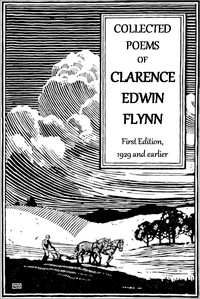
Clarence Edwin Flynn's Collected Poems, First Series (1929 and earlier) presents a body of work that moves between homely anecdote and moral instruction. The poems, ordered by publication year, reveal a poet who adjusts his register from the plain-spoken nostalgia of early pieces like “The First Meal at Home” to the more abstract, aphoristic tone of later works such as “The Future.” This note traces three observable patterns in Flynn's language and pacing, drawing only on the excerpts provided.
From Domestic Detail to Universal Maxim
Flynn’s early poems ground themselves in specific, sensory details. In “The First Meal at Home,” the speaker recalls “eggs and the potatoes, too, / Were strong with rancid lard,” a concrete image that anchors the poem in a particular memory. The pace is leisurely, building toward the contrast between that humble meal and later “choicest viands.” By contrast, later poems such as “A Day at a Time” adopt a repetitive, incantatory structure: “A day at a time the world moves on; / A day at a time is our toiling done.” The language becomes abstract, the imagery generic. This shift from the particular to the universal suggests a poet increasingly concerned with moral aphorism rather than personal recollection.
The Voice of the Preacher Emerges
Flynn’s clerical background surfaces in poems that adopt a homiletic tone. “The Cross v1927” directly invokes scripture (Luke 22:42) and closes with a couplet: “When cross the ways of self and God, / And God’s good way prevails.” The language is plain, the rhythm regular, and the message unambiguous. In “God’s Manners,” the speaker instructs the reader to “Fare forth some summer morn” and observe nature as a lesson in divine character. The imperative mood and direct address (“If you would learn God’s manners”) create a teacherly voice. This contrasts with the more playful, observational tone of “The Umbrella Mender,” where the mender’s cry is rendered as a practical proverb about preparedness.
Pacing as a Rhetorical Tool
Flynn varies line length and stanza structure to control pace. “Cupid’s Lament” uses short, clipped lines and a regular ABAB rhyme scheme to create a light, almost comic rhythm: “The coal oil lamp is now no more, / With flame to dimness fingered.” The poem moves quickly, matching its playful complaint. In contrast, “The Great Adventure” (partially excerpted) opens with a declarative statement—“The great adventure is not death, / ’Tis life”—and then slows with enjambment and longer lines. The shift in pace mirrors the poem’s shift from negation to affirmation. Across the collection, Flynn adjusts his meter to suit the mood, from brisk narrative to measured reflection.
Readers approaching this collection may find it useful to attend to the publication dates, as Flynn’s voice and concerns evolve noticeably. The early poems reward attention to concrete detail, while the later ones often function as compressed sermons. The editor’s decision to order poems chronologically and alphabetically within years makes these shifts visible, though the excerpts here represent only a fraction of the full volume.
There are evenings when Flynn’s measured nostalgia settles like dust on a sill, and I think of those old alliterative lines—their rough, deliberate cadence answering his quieter struggle between plain speech and ornament. Both ask the same gentle question: how does a voice hold both home and longing? Early English Alliterative Poems in the West-Midland Dialect of the Fourteenth Century — Context and Discussion waits patiently nearby, a familiar hush between two companions.