About 61 minutes
Eight Harvard Poets — Reading Notes
Science Fiction Utopias
13,830 recorded words. 0 minutes difference from this book's estimate.
View Gutenberg source #36508
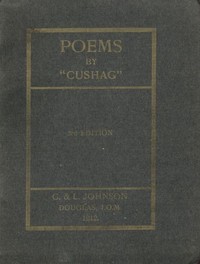
Before opening Poems — Context and Discussion, the edition data offers a quick orientation: 13,889 words, 1 hr 1 min estimated reading time, and 2 detected text sections.
The text analysis averages about 21.2 words per sentence, while the detected sections provide another way to judge how the source is divided.
Project Gutenberg metadata also associates the work with “English poetry -- 20th century,” connecting these edition facts with the source record’s subject description.
Explore this collection
These alternatives are selected using recorded categories and estimated reading time.
About 61 minutes
Science Fiction Utopias
13,830 recorded words. 0 minutes difference from this book's estimate.
View Gutenberg source #36508About 58 minutes
Science Fiction Utopias
13,321 recorded words. 3 minutes difference from this book's estimate.
View Gutenberg source #36620About 64 minutes
Science Fiction Utopias
14,544 recorded words. 3 minutes difference from this book's estimate.
View Gutenberg source #62146Search stored excerpts and compare books → Choose by your preferences →
Choices use stored catalog measurements. Estimates vary with reading speed. A shared category is a catalog label, not a claim that two books have the same argument or literary quality.
Search reads excerpt text stored with this catalog and links to its associated Gutenberg record. The connection is stored in the site database; this tool does not recheck that every excerpt is word-for-word identical to that external record. Excerpt search does not cover every chapter and does not verify historical publication dates.
Catalog snapshot checked: 2026-09-25. Coverage: 95 public books, 95 available source excerpts.
Read the complete public-domain text at its original source.
Read on Project GutenbergCushag, the pen name of Josephine Kermode, writes in a distinctive voice that mingles Manx dialect with formal English, often within a single poem. In 'The Wans from Up,' a mother's repeated phrase 'I'm thinkin' 'twas Wans from Up' contrasts with the child's 'Fayries,' marking a quiet tension between folk belief and maternal intuition. The poems frequently employ incremental repetition and a ballad-like structure, as seen in 'Little Boy Beg,' where the refrain 'with your little grey dog an' all' anchors each stanza. This editorial note examines how Cushag's diction, dialogue, and descriptive choices shape her poetic world.
Cushag uses Manx dialect sparingly but strategically, often in dialogue or direct address. In 'The Wans from Up,' the child says 'lave a piece of my supper' and 'dhrop of milk,' while the mother's narration remains standard English. This contrast marks the child's speech as intimate and local. Similarly, 'Little Boy Beg' opens with 'Where are you going, little Boy Beg, / With your little grey dog an' all?'—the 'an' all' a colloquial tag that softens the question. In 'Oie-Vie,' the Manx phrase 'ma chree' (my heart) and 'oie-vie' (good night) recur as refrains, embedding the domestic into the lyrical. These choices root the poems in a specific Isle of Man setting without overwhelming the reader with unfamiliar terms.
The opening poem 'To the Cushag's Friend' establishes the cushag flower as a symbol of humble beauty and fairy power: 'The cushag flower had fairy power / In olden times, you know.' The poem contrasts the farmer's view of it as a 'shocking weed' with its golden, star-like appearance 'along the rills in the heart of the hills.' This motif recurs in 'The Phynodderee' and 'The Passing of the Fairies,' where fairy beings are linked to natural features. In 'The Wans from Up,' the child's 'lil wans' are ambiguous—fairies or angels?—and the mother's final line 'An' she went to the Wans from Up' suggests a death that is both loss and transcendence. Cushag repeatedly uses fairy lore not as mere fantasy but as a lens for grief and hope.
Cushag often builds poems around a single exchange or repeated question. In 'Little Boy Beg,' the speaker asks 'Where are you going?' and the boy replies with a quest for the King and Queen to cure him. The poem never reveals the outcome, leaving the reader in suspense. In 'The Mountain Maid,' the maid's monologue traces her emotional arc through four stanzas: 'What could I do but sing? ... but long? ... but love? ... but die?' The progression is stark, each stanza ending with a rhetorical question that deepens her isolation. 'John the Priest' uses third-person narration but includes the priest's internal curse of 'his dreary days,' contrasting his scholar's 'bay' with the 'savage Corna dale.' These dialogues and internal voices give the poems a dramatic, almost theatrical quality.
Many poems employ a refrain that shifts slightly with each stanza, creating a cumulative effect. In 'The Wans from Up,' the mother's refrain 'I'm thinkin' 'twas Wans from Up' changes to 'I knew it was Wans from Up' and finally 'An' she went to the Wans from Up,' marking the child's departure. 'Oie-Vie' repeats 'Oie-vie, ma chree' as a lullaby-like anchor, while the content moves from the speaker's departure to divine protection. 'The Baby-Boy Carol' uses a parallel structure: each stanza describes Jesus's simple surroundings ('No broidered robes,' 'No gilded toys,' 'No pictures'), then contrasts them with heavenly presence. This repetition reinforces the theme of humble holiness. Cushag's refrains are not mere decoration; they carry the emotional weight of each poem's argument.
Cushag's poems reward attention to small verbal details: the shift from 'Fayries' to 'Wans from Up,' the recurring 'cushag' as both weed and star, the way a child's dialect marks her as vulnerable. Readers may find it useful to read aloud, especially the refrains and dialect passages, to hear the interplay of local speech and formal verse. The poems are brief but layered, and their emotional directness—whether in a mother's grief or a maid's despair—gains power from the restraint of Cushag's diction.
Cushag’s golden gorse and fairy whispers always leave me with a particular ache—a longing for a grace just out of reach. That same unhurried searching surfaces in the older verse of Davies, whose quiet, measured lines feel like a lantern held up in a dim room. Something about The Complete Poems of Sir John Davies. Volume 2 of 2. — A Reader’s Guide comforts me in that same familiar, half-mournful way.
Answer a few questions and save a private reflection on this device.









