About 62 minutes
Poems on Golf — Themes and Context
Historical Psychological Social Fiction
14,168 recorded words. 2 minutes difference from this book's estimate.
View Gutenberg source #37323
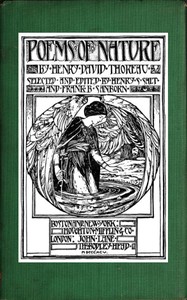
The catalog record for Poems of Nature — Inside the Classic provides practical reading context through 13,594 words, 1 hr estimated reading time, and 3 detected text sections.
The text analysis averages about 27.5 words per sentence, while the detected sections provide another way to judge how the source is divided.
Project Gutenberg metadata also associates the work with “American poetry -- 19th century,” connecting these edition facts with the source record’s subject description.
Explore this collection
These alternatives are selected using recorded categories and estimated reading time.
About 62 minutes
Historical Psychological Social Fiction
14,168 recorded words. 2 minutes difference from this book's estimate.
View Gutenberg source #37323About 65 minutes
Historical Psychological Social Fiction
14,809 recorded words. 5 minutes difference from this book's estimate.
View Gutenberg source #35536About 71 minutes
Historical Psychological Social Fiction
16,291 recorded words. 11 minutes difference from this book's estimate.
View Gutenberg source #33770Search stored excerpts and compare books → Choose by your preferences →
Choices use stored catalog measurements. Estimates vary with reading speed. A shared category is a catalog label, not a claim that two books have the same argument or literary quality.
Search reads excerpt text stored with this catalog and links to its associated Gutenberg record. The connection is stored in the site database; this tool does not recheck that every excerpt is word-for-word identical to that external record. Excerpt search does not cover every chapter and does not verify historical publication dates.
Catalog snapshot checked: 2026-09-25. Coverage: 95 public books, 95 available source excerpts.
Read the complete public-domain text at its original source.
Read on Project GutenbergThe introduction to this 1895 collection, edited by Henry S. Salt and F. B. Sanborn, immediately establishes that the fifty poems represent roughly two-thirds of Thoreau's preserved verse, most written before his twenty-sixth year. The editors quote Thoreau's own 1841 letter describing himself 'in the mid-sea of verses' that rustle round him 'as the leaves would round the head of Autumnus himself.' This self-deprecating image—verses as crisped yellow leaves fit only for mould—sets a tone of youthful ambition tempered by uncertainty. The introduction further notes that after 1843 Thoreau wrote few poems and destroyed many, partly due to Emerson's exacting standards. These editorial remarks frame the collection not as a definitive canon but as a salvage operation, recovering poems that Thoreau himself had doubted.
The poem 'The Poet's Delay' voices a frustration that recurs throughout the collection: 'In vain I see the morning rise, / In vain observe the western blaze, / Who idly look to other skies, / Expecting life by other ways.' The speaker feels internally poor despite external abundance, with birds having 'sung their summer out' while his own spring has not begun. This tension between natural cycles and personal stagnation appears also in 'Nature's Child,' where the speaker declares 'I am all sere and yellow, / And to my core mellow,' and in 'The Fall of the Leaf,' which thanks God for seasons but notes that 'a sober mind will walk alone, / Apart from nature, if need be.' These poems suggest that Thoreau used seasonal imagery not merely to describe nature but to chart an inner landscape of creative delay and self-reliance.
Several poems fix on celestial or atmospheric phenomena as emblems of constancy or change. 'The Moon' opens with a quotation from Raleigh and insists that the moon 'does not wane, but my fortune, / Which her rays do not bless; / My wayward path declineth soon, / But she shines not the less.' The moon's unchanging light contrasts with the speaker's variable luck. In 'Haze' and 'Smoke,' the speaker addresses mist and smoke as if they were companions, while 'The Aurora of Guido' and 'The Atlantides' reach toward mythological grandeur. These pieces share a tendency to personify natural forces and to measure human transience against their permanence. The effect is cumulative: by the time one reaches 'The Moon,' the reader has learned to watch for moments where Thoreau turns a descriptive detail into a philosophical pivot.
Thoreau's poetic voice shifts between a compressed, epigrammatic style and a more expansive, meditative one. Short poems like 'Smoke' ('Light-winged Smoke, Icarian bird, / Melting thy pinions in thy upward flight') and 'The Vireo' ('Upon the lofty elm-tree sprays / The vireo rings the changes sweet') use tight quatrains and regular meter. Longer pieces such as 'The Fall of the Leaf' employ looser stanzas with enjambment and internal rhyme: 'The evening of the year draws on, / The fields a later aspect wear; / Since Summer's garishness is gone, / Some grains of night tincture the noontide air.' The editors' note that many poems were first published in The Dial or embedded in Walden and The Week suggests that Thoreau often tested his verse in prose contexts. Reading the poems together reveals a writer experimenting with how much philosophical weight a lyric can bear.
The introduction by Salt and Sanborn does more than list sources; it shapes how a reader approaches the poems. By stating that 'most of Thoreau's poems were composed early in his life, before his twenty-sixth year,' and that he 'had destroyed perhaps as many as he had retained,' the editors imply that the collection is both a recovery and a selection. They also recount Emerson's role: he 'would admit but a small number of them to the slight selection which he appended to the posthumous edition of Thoreau's Letters.' This editorial history invites the reader to consider each poem as a contested artifact. The table of contents, with its mix of titled poems and generic 'Lines' or 'Stanzas,' further suggests that Thoreau did not always finalize his titles. A first-time reader might use the introduction as a map, noting which poems were preserved by Thoreau himself and which were retrieved by others.
Reading these poems in sequence—from the early 'Nature' and 'Inspiration' through the seasonal meditations to the late 'Independence' and 'My Prayer'—offers a compressed view of Thoreau's poetic development. The collection rewards attention to recurring words (moon, leaf, smoke, delay) and to the tension between self-doubt and assertion. Because the excerpts are incomplete, the reader cannot assess the full arc, but the patterns visible here invite a careful, comparative reading of the complete text.
There’s something tender about reading Thoreau’s early verses, knowing he was still finding his footing. That same quiet ache for the open road lingers in Greek wayfarers, and other poems — A Closer Reading, where the wanderers feel less like heroes and more like fellow travelers. I keep returning to both, just to sit with that feeling.
Save your reaction, strongest insight, and memorable passage.









