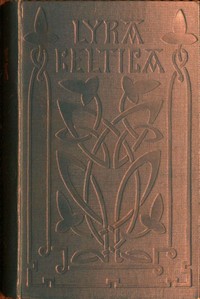
The anthology opens with Amergin's Mystery, an ancient Irish poem of incantation and self-identification, immediately establishing a tone of mystical authority. The editors have organized the collection by linguistic and geographical groupings—Ancient Irish and Scottish, Early Armorican, Early Cymric, and modern Irish—creating a layered journey through centuries of Celtic verse. The excerpts show a preoccupation with thresholds: between life and death, human and faëry, mortal and immortal. In the excerpt from The Faëry Foster-Mother, a mortal woman nurses a fairy child while longing for her own home, a tension that recurs across the anthology. The structure invites comparison across regions, as similar motifs—laments, nature invocations, and supernatural encounters—appear in different forms.
Recurring Images of Loss and Absence
The excerpts repeatedly depict loss not as a single event but as a lingering absence. In the long poem excerpt, the speaker describes a plague or calamity where “the dog in lonely places cried not over / The body of his master; but it missed him, / And whined into the air, and died, and rotted.” The image of the dog’s aimless grief mirrors the human condition: bereavement without ritual, without closure. The poem catalogues missing comforts: “no sweet green graves to sit and muse on,” “no putting tokens under pillows.” This emphasis on the lack of traditional mourning practices heightens the sense of desolation. Similarly, in Credhe’s Lament, the speaker mourns a lost hero, and the natural world itself seems to grieve. The anthology’s structure, moving from ancient laments to modern poems, suggests that this theme of irrecoverable loss is a constant across Celtic poetry.
The Supernatural as a Nearby Presence
Faëries, spirits, and otherworldly beings appear not in a distant realm but interwoven with everyday life. In The Faëry Foster-Mother, the mortal woman is seized by “elfins three times three” and forced to nurse a fairy child. The poem’s domestic details—the silver cradle, the pygmy pages—contrast with the mother’s grief: “my heart is far away.” The supernatural is not ethereal but tangible, even bureaucratic. In The Lord Nann and the Fairy, a human marries a fairy woman, with consequences that blur the boundary between worlds. The anthology’s arrangement places such poems alongside invocations like The Rune of St Patrick, where Christian and pagan elements mix. This juxtaposition suggests that for the Celtic poets, the supernatural was a constant, often unsettling, presence.
Movement Between Scenes and Voices
The anthology’s structure emphasizes shifts in perspective and setting. The excerpt from the long poem moves abruptly from a desolate landscape to a domestic scene: “I saw a two-years’ child, and he was playing; / And he found a dead white bird upon the doorway, / And laughed.” The child’s innocence contrasts with the mother’s bitterness, and the bird’s mate “flitted round and round it, / And uttered a sharp cry.” The poem then shifts to a prayer of acceptance, ending with a blessing on “Corruption.” This rapid movement between external observation and internal reflection is characteristic of the anthology. In The March of the Faërie Host, the poem shifts from a martial procession to a vision of beauty. The editors’ choice to group poems by region and period highlights how different cultures handle these transitions—from the starkness of ancient Irish verse to the more ornate modern poems.
Nature as Witness and Participant
Nature in these poems is rarely a passive backdrop. In the plague poem, the “blue fly” feeds on a horse, and the “lizard on the ruin” is a sign of desolation. The dead white bird becomes a focus of grief and ritual: the mother “flung the dead white bird across the threshold; / And another white bird flitted round and round it, / And lit beside its dead mate, and grew busy, / Strewing it over with green leaves and yellow.” The bird’s actions mirror human mourning, but without the comfort of ceremony. In Taliesin Song to the Wind, the wind is addressed as a powerful, invisible force. The anthology’s nature imagery is often specific and tactile: “blue-bell banks,” “snow-white silk,” “green leaves and yellow.” This concreteness grounds the supernatural and emotional elements in a recognizable world.
Readers approaching Lyra Celtica will find a collection that rewards attention to its arrangement. The editors have created a dialogue between ancient and modern voices, and between different Celtic traditions. Rather than reading straight through, consider comparing poems on similar themes—laments, nature invocations, or supernatural encounters—across sections. The notes by William Sharp provide context, but the poems themselves offer the richest experience of Celtic poetry’s recurring concerns: loss, the supernatural, and the natural world as both witness and participant.
Some nights, reading through Lyra Celtica, I kept thinking how certain laments feel less like old verses and more like echoes of a conversation I’ve had with myself—loss wrapped in landscape, lingering after the page turns. That same quiet ache, the one woven between invocation and memory, stayed with me when I sat with Poems & Poèmes; autres alliances — Background and Themes. A different voice, yet somehow the same weather in the room.