About 119 minutes
The Book of Brave Old Ballads — Background and Themes
Science Fiction Utopias
27,159 recorded words. 1 minutes difference from this book's estimate.
View Gutenberg source #25480
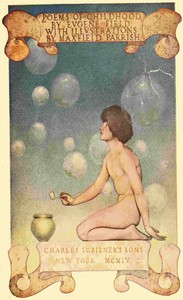
Poems of childhood — Key Ideas to Explore can be approached with a clearer sense of reading commitment from its source measurements: 27,017 words, 1 hr 58 min estimated reading time, and 99 detected text sections.
The text analysis averages about 28.2 words per sentence, while the detected sections provide another way to judge how the source is divided.
Project Gutenberg metadata also associates the work with “Children's poetry, American,” connecting these edition facts with the source record’s subject description.
Explore this collection
These alternatives are selected using recorded categories and estimated reading time.
About 119 minutes
Science Fiction Utopias
27,159 recorded words. 1 minutes difference from this book's estimate.
View Gutenberg source #25480About 112 minutes
Science Fiction Utopias
25,603 recorded words. 6 minutes difference from this book's estimate.
View Gutenberg source #23245About 125 minutes
Science Fiction Utopias
28,563 recorded words. 7 minutes difference from this book's estimate.
View Gutenberg source #40444Search stored excerpts and compare books → Choose by your preferences →
Choices use stored catalog measurements. Estimates vary with reading speed. A shared category is a catalog label, not a claim that two books have the same argument or literary quality.
Search reads excerpt text stored with this catalog and links to its associated Gutenberg record. The connection is stored in the site database; this tool does not recheck that every excerpt is word-for-word identical to that external record. Excerpt search does not cover every chapter and does not verify historical publication dates.
Catalog snapshot checked: 2026-09-25. Coverage: 95 public books, 95 available source excerpts.
Read the complete public-domain text at its original source.
Read on Project GutenbergEugene Field's Poems of Childhood (1904) presents a collection of verses that rely on rhythmic repetition, invented words, and a conversational tone to evoke the world of young children. The poems often adopt a first-person adult speaker addressing a child, as in 'Booh!,' where the father describes playing peek-a-boo: 'I suddenly expose my face to view, / And you should hear him laugh and crow when I say "Booh!"' This direct address creates an intimate, playful dynamic. Field also experiments with sound—the wind's 'Yooooo' in 'The Night Wind' becomes a repeated motif that both frightens and fascinates. The illustrations by Maxfield Parrish, reproduced in color, complement the text with dreamlike imagery.
Field frequently coins or adapts words to mimic childlike speech or to create a whimsical atmosphere. In 'The Dinkey-Bird,' the title itself is an invention, and the poem features a 'dinkey-bird' that sings 'in the amfalula tree.' Such nonsense terms appear throughout: 'Luddy-Dud,' 'Googly-Goo,' and 'Shuffle-Shoon and Amber-Locks' are character names that prioritize sound over sense. This lexical playfulness extends to lullabies like 'Little Blue Pigeon,' where the refrain 'Hush-a-by, my little pigeon' uses a diminutive to soften the address. Field also employs dialect or colloquial contractions—'cunnin’ little thing,' 'jest ’fore Christmas'—to ground the poems in a specific, informal American voice. These choices suggest an authorial interest in capturing the rhythm and vocabulary of domestic speech rather than formal poetic diction.
Many poems are structured around a speaker directly addressing a child or an imagined listener. In 'Booh!,' the father narrates the game in present tense, creating a sense of immediacy: 'Sometimes the rascal tries to make believe that he is scared.' The child's response is quoted: 'he bids me “do it all aden!”' This inclusion of the child's imperfect speech adds authenticity. 'The Night Wind' uses a question-and-answer format: the speaker asks the wind 'Whom do you want, O lonely night?' and the wind replies with a drawn-out 'Yoooooooo.' The poem then shifts to a memory of the mother's explanation, blending dialogue with narrative. In 'Kissing Time,' the speaker addresses the lark, bee, and winds directly, personifying nature as participants in a daily ritual. This technique gives the poems a theatrical quality, as if the reader overhears a private conversation.
Field's descriptions often blend the domestic with the fantastical. 'Garden and Cradle' parallels a baby's walk in the garden with his swinging in the cradle: 'The posies they are good to him, / And bow them as they should to him.' The garden is a courtly space where nature defers to the child. In 'The Sugar-Plum Tree,' the setting is a dreamlike orchard where 'you can gather the fruit in a shower.' Conversely, 'The Night Wind' uses the domestic bedroom as a site of fear: 'With the blankets pulled up round my head.' The wind's moan is described as 'pitiful' and 'ghostly,' contrasting with the cozy interior. 'The Rock-a-By Lady' introduces a supernatural figure who 'comes stealing; comes creeping' from 'Hushaby street,' merging the familiar (a lullaby) with the eerie. These settings oscillate between safety and unease, reflecting childhood's emotional range.
Several motifs recur across the collection: lullabies, bedtime, and the transition from wakefulness to sleep. Poems like 'Wynken, Blynken and Nod,' 'The Shut-Eye Train,' and 'Hushaby, Sweet my Own' use rhythmic repetition and soothing imagery to induce drowsiness. The phrase 'rock-a-by' appears in multiple titles, linking the poems to the traditional cradle-rocking motion. Another pattern is the use of cumulative or circular structures: 'Booh!' ends by anticipating the time when the game will no longer be played, while 'The Night Wind' returns to the wind's cry after each stanza. Field also employs refrains—'Yoooooooo' in 'The Night Wind,' 'half-past kissing time' in 'Kissing Time'—to create a musical, incantatory effect. These structural choices emphasize ritual and repetition, mirroring the routines of childhood.
Field's poems reward attention to the specific words and rhythms he chooses—the nonsense names, the repeated sounds, the shifts between adult and child voices. The excerpts show a poet who treats childhood as a distinct linguistic world, complete with its own logic and fears. Readers may find it useful to compare the lullabies with the more narrative poems to see how Field varies his approach. The illustrations by Maxfield Parrish, though not analyzed here, add another layer of visual interpretation to the text.
I found myself humming one of Eugene Field’s lullabies, with its made-up words and gentle rocking rhythm, and it reminded me how comfort can hide within strange sounds. That same feeling surfaced later when I revisited The Poems of John Donne, Volume 2 (of 2) Edited from the Old Editions and Numerous Manuscripts — Inside the Classic—his wordplay feels less playful, but no less tender in its own searching way.
Answer a few questions and save a private reflection on this device.









