About 131 minutes
Sword Blades and Poppy Seed — Key Ideas to Explore
Science Fiction Utopias
30,016 recorded words. 10 minutes difference from this book's estimate.
View Gutenberg source #1020
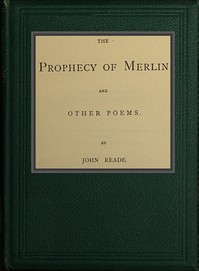
This digital edition of The Prophecy of Merlin, and Other Poems — Reading Companion is described by source-level measurements including 32,329 words, 2 hr 21 min estimated reading time, and 7 detected text sections.
The text analysis averages about 24.5 words per sentence, while the detected sections provide another way to judge how the source is divided.
Project Gutenberg metadata also associates the work with “Canadian poetry -- 19th century,” connecting these edition facts with the source record’s subject description.
Explore this collection
These alternatives are selected using recorded categories and estimated reading time.
About 131 minutes
Science Fiction Utopias
30,016 recorded words. 10 minutes difference from this book's estimate.
View Gutenberg source #1020About 128 minutes
Science Fiction Utopias
29,357 recorded words. 13 minutes difference from this book's estimate.
View Gutenberg source #18673About 125 minutes
Science Fiction Utopias
28,563 recorded words. 16 minutes difference from this book's estimate.
View Gutenberg source #40444Search stored excerpts and compare books → Choose by your preferences →
Choices use stored catalog measurements. Estimates vary with reading speed. A shared category is a catalog label, not a claim that two books have the same argument or literary quality.
Search reads excerpt text stored with this catalog and links to its associated Gutenberg record. The connection is stored in the site database; this tool does not recheck that every excerpt is word-for-word identical to that external record. Excerpt search does not cover every chapter and does not verify historical publication dates.
Catalog snapshot checked: 2026-09-25. Coverage: 95 public books, 95 available source excerpts.
Read the complete public-domain text at its original source.
Read on Project GutenbergThe title poem, The Prophecy of Merlin, begins not with Merlin but with Sir Bedivere lamenting Arthur's departure, a scene that establishes a tone of elegiac loss. Reade's collection then ranges widely: from classical retellings of Hector and Andromache to biblical figures like Jephthah and Sisera, and from Canadian subjects such as Dominion Day (1867) to personal lyrics. The verse forms vary, including sonnets, ballads, and irregular stanzas, with a recurring interest in prophecy, memory, and the passage of time.
The book's first poem places the reader in a post-Arthurian world. Sir Bedivere, alone on a beach, watches the barge carry Arthur to Avalon. Reade gives him a long monologue of grief: “gone are the pleasant days / At Camelot.” The language is direct, with repeated exclamations and questions (“whither, whither can I go?”). This opening establishes a mood of loss that recurs throughout the collection, but it also introduces a prophetic element—Merlin's prophecy, though not yet delivered, is promised by the title. The reader is left to wonder how the prophecy will unfold, as the excerpt ends before Merlin speaks.
Several poems draw on classical sources: Hector and Andromache, The Lament of Andromache, Priam and Helen, and Orpheus and Eurydice. Reade often focuses on moments of parting or loss, as in the Trojan scenes. Biblical figures appear in Jephthah, Sisera, Balaam, and The Prodigal's Return. These are not simple retellings; Reade adds psychological depth, as in Eloise, where the speaker addresses Heloise with “fatal beauty” and a desire to “perish with sweet fire.” The variety suggests a poet testing different voices and traditions, from epic to lyric.
Reade includes poems on Canadian subjects, such as Dominion Day (celebrating Canadian Confederation in 1867) and The Fenian Raid (referring to the 1866 Fenian incursions). Dominion Day personifies the land with “gay-hued tresses” and “zephyr-throbs,” a sensual, patriotic image. The Fenian Raid is more somber, reflecting on conflict. These poems ground the collection in a specific time and place, contrasting with the ancient settings of the classical and biblical pieces. The juxtaposition suggests Reade's interest in connecting contemporary events to larger historical or mythic patterns.
Across the collection, certain motifs recur. When the Spring-time Comes uses the refrain to contrast winter's cold with the promise of renewal, but also acknowledges death: “Death is colder still.” Hope personifies the virtue as a comforting figure who “broke the fetters of my grief.” The sonnet Unspoken and the lyric Sing me the Songs I Love emphasize memory and longing. Even in poems like The Old War-horse or To a Dead Field Flower, the tone is elegiac. Yet the collection ends with religious hope in Vox Dei and Christus Salvator, suggesting a movement from loss to faith.
Readers approaching this collection should note its structural variety: the poems are not arranged chronologically or by theme, but in a sequence that juxtaposes different moods and sources. Pay attention to how Reade uses repeated images—spring, snow, fire, light—across poems. The title poem may be best read after sampling the shorter works, as its prophecy gains resonance from the collection's broader concerns with time, memory, and renewal.
I reached for Reade’s Merlin again last week, and found myself thinking how its old sorrows—the fading of once-great things—settle like dust on a shelf. That same ache lives in the clattering rhymes of The Book of Brave Old Ballads — Background and Themes, where every hero’s song already knows its own ending. They keep each other company in the dark.
Your answers remain private and are stored only in this browser.









