About 48 minutes
October, and Other Poems; with Occasional Verses on the War — A Reader’s Guide
Fantasy Juvenile Worlds
10,942 recorded words. 2 minutes difference from this book's estimate.
View Gutenberg source #55031
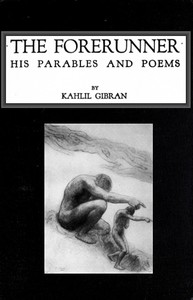
For The Forerunner, His Parables and Poems — Text and Context, the stored edition analysis reports 10,373 words, 46 min estimated reading time, and 2 detected text sections.
The text analysis averages about 19.8 words per sentence, while the detected sections provide another way to judge how the source is divided.
Project Gutenberg metadata also associates the work with “Parables,” connecting these edition facts with the source record’s subject description.
Explore this collection
These alternatives are selected using recorded categories and estimated reading time.
About 48 minutes
Fantasy Juvenile Worlds
10,942 recorded words. 2 minutes difference from this book's estimate.
View Gutenberg source #55031About 48 minutes
Fantasy Juvenile Worlds
11,025 recorded words. 2 minutes difference from this book's estimate.
View Gutenberg source #66362About 50 minutes
Fantasy Juvenile Worlds
11,329 recorded words. 4 minutes difference from this book's estimate.
View Gutenberg source #301Search stored excerpts and compare books → Choose by your preferences →
Choices use stored catalog measurements. Estimates vary with reading speed. A shared category is a catalog label, not a claim that two books have the same argument or literary quality.
Search reads excerpt text stored with this catalog and links to its associated Gutenberg record. The connection is stored in the site database; this tool does not recheck that every excerpt is word-for-word identical to that external record. Excerpt search does not cover every chapter and does not verify historical publication dates.
Catalog snapshot checked: 2026-09-25. Coverage: 95 public books, 95 available source excerpts.
Read the complete public-domain text at its original source.
Read on Project GutenbergThe Forerunner opens with a prose poem that establishes a recursive structure: “You are your own forerunner, and the towers you have builded are but the foundation of your giant-self.” This image of the self as both builder and foundation, forerunner and follower, recurs throughout the collection. The speaker describes himself as a “wandering desire in the mist” and a “silent word upon Life’s quivering lips,” suggesting that the parables that follow are not fixed teachings but provisional utterances, each one a seed for “fields yet unploughed.” The book’s movement between prose poems, dialogues, and brief fables mirrors this restless, self-surpassing logic.
Several pieces in The Forerunner take the form of pointed dialogues between creatures or objects that embody opposing modes of knowing. In “The Scholar and the Poet,” a serpent and a lark trade claims: the serpent boasts of hidden caves, rubies, and a purple stream that grants immortality; the lark counters each boast with the refrain “pity thou canst not fly” or “pity thou canst not sing.” The serpent’s knowledge is subterranean and secret, the lark’s is aerial and expressive. Neither fully concedes, but the serpent retreats into its hole muttering “Empty headed songster!” while the lark flies away singing. The dialogue does not resolve the conflict but dramatizes its stalemate.
A similar structure appears in “Other Seas,” where one fish asserts the existence of another sea above, and the other dismisses it as “Pure fancy!” The skeptic demands proof, but the believer offers none. The parable ends without a third voice to adjudicate. These dialogues leave the reader suspended between two incomplete perspectives, each limited by its own element.
Gibran repeatedly uses the image of something buried—a statue, a temple, a root—to probe the relation between hidden worth and surface judgment. In “Values,” a man unearths a marble statue and sells it to a collector for a large price. Walking home, the man thinks of the money: “How much life this money means! How can any one give all this for a dead carved stone buried and undreamed of in the earth for a thousand years?” The collector, gazing at the statue, thinks in parallel: “What beauty! What life! The dream of what a soul!—and fresh with the sweet sleep of a thousand years. How can any one give all this for money, dead and dreamless?” The symmetrical thoughts reveal that value is not intrinsic but a function of perspective. Neither man is wrong; each sees only what his own orientation allows.
The serpent in “The Scholar and the Poet” also speaks of a buried temple “built by a forgotten race of giants,” with walls graven with “the secrets of time and space.” But this hidden knowledge remains inaccessible to the lark, just as the lark’s song is inaccessible to the serpent. The buried thing is a figure for what cannot be exchanged or communicated across different modes of being.
The title poem establishes a recursive model of the self: “Always have we been our own forerunners, and always shall we be.” The speaker describes a process of continual self-surpassing: the shadow cast at sunrise is gathered at noon, only to be replaced by another shadow at the next sunrise. The self is never identical with its current form; it is always ahead of itself, a foundation for a future self that will itself become a foundation. This structure echoes through the collection’s arrangement, which moves from “God’s Fool” to “The Last Watch,” suggesting a progression that is also a return.
In “The Greater Self,” the theme is made explicit: the “greater self” is not a distant ideal but something that “lives in the soul of the other man.” The boundaries between self and other, present and future, are permeable. The book’s final piece, “The Last Watch,” returns to the imagery of dawn and shadow, closing the cycle without closing the process.
Several parables hinge on failed or ironic exchanges. In “Values,” the farmer and the collector each think the other has made a poor trade—one valuing money, the other beauty. The parable does not side with either; it simply presents the incommensurability of their valuations. In “Repentance,” a man steals an unripe melon and feels remorse—not for the theft, but for having stolen something worthless. The disproportion between the act and the emotion is comic and unsettling.
“The Dying Man and the Vulture” (partially excerpted) stages a grim negotiation: the dying man asks the vulture to wait, implying a last-minute reprieve or revelation that the excerpt does not provide. The vulture, like the collector or the serpent, represents a perspective that sees only what it is equipped to see. These parables collectively suggest that understanding between different orders of being—human and animal, materialist and idealist, earthly and transcendent—is always partial and often ironic.
Readers approaching The Forerunner will find a book that resists linear argument. Its parables and poems circle back on themselves, each piece a variation on a few core images: flight and burial, shadow and foundation, the forerunner and the follower. Gibran’s prose is rhythmic and aphoristic, often balancing a single sentence between two opposing claims. The best way into the collection may be to read it as a series of meditations on the limits of any single perspective—including the author’s own.
Sometimes, when I think about Gibran's haunting ladder of flight—that near-vertical spiral between the mud and the stars—my mind drifts to another quiet hour in another cell. There’s something in his buried seed that reminds me of the fall in The Ballad of Reading Gaol — Themes and Context, how both men found their freedom only at the very bottom of the stone.
Answer a few questions and save a private reflection on this device.