About 192 minutes
Keats: Poems Published in 1820 — A Reader’s Guide
Adventure Picaresque Fiction
44,133 recorded words. 13 minutes difference from this book's estimate.
View Gutenberg source #23684
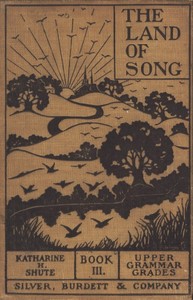
The catalog record for The Land of Song, Book 3. For upper grammar grades — Text and Context provides practical reading context through 46,941 words, 3 hr 25 min estimated reading time, and 11 detected text sections.
The text analysis averages about 21.4 words per sentence, while the detected sections provide another way to judge how the source is divided.
Project Gutenberg metadata also associates the work with “English poetry,” connecting these edition facts with the source record’s subject description.
Explore this collection
These alternatives are selected using recorded categories and estimated reading time.
About 192 minutes
Adventure Picaresque Fiction
44,133 recorded words. 13 minutes difference from this book's estimate.
View Gutenberg source #23684About 191 minutes
Adventure Picaresque Fiction
43,759 recorded words. 14 minutes difference from this book's estimate.
View Gutenberg source #45244About 171 minutes
Adventure Picaresque Fiction
39,182 recorded words. 34 minutes difference from this book's estimate.
View Gutenberg source #37074Search stored excerpts and compare books → Choose by your preferences →
Choices use stored catalog measurements. Estimates vary with reading speed. A shared category is a catalog label, not a claim that two books have the same argument or literary quality.
Search reads excerpt text stored with this catalog and links to its associated Gutenberg record. The connection is stored in the site database; this tool does not recheck that every excerpt is word-for-word identical to that external record. Excerpt search does not cover every chapter and does not verify historical publication dates.
Catalog snapshot checked: 2026-09-25. Coverage: 95 public books, 95 available source excerpts.
Read the complete public-domain text at its original source.
Read on Project GutenbergThe compilers' preface to The Land of Song, Book 3 (1899) lays out a deliberate pedagogical philosophy: literature should foster a genuine love of reading, not merely serve chronology or moral training. The editors argue that children's interests center on the marvelous, the natural world, and human life—especially the romantic and heroic. This framework shapes the anthology's selection, which includes poems by Browning, Arnold, Lowell, and others, arranged for grades seven through nine.
The excerpts reveal a striking range of narrative voice. Browning's "Hervé Riel" adopts a direct, colloquial address to its subject, while "The Patriot" shifts from triumphant procession to grim scaffold in tight, rhyming stanzas. Arnold's "Rugby Chapel" uses a solemn, free-verse cadence, and Lowell's sonnet on Wendell Phillips employs a compressed, argumentative structure. These contrasts in pace and tone offer a rich field for examining how poets manipulate rhythm and address to shape meaning.
Several poems in the anthology employ direct address, but with markedly different effects. Browning's "Hervé Riel" opens with an apostrophe to the title character: "So, for better and for worse, Hervé Riel, accept my verse!" The tone is familiar, almost conversational, as the speaker commands the sailor to "do thou once more / Save the squadron." This creates an intimate, urgent rhythm. In contrast, Arnold's "Rugby Chapel" addresses a father figure in a reverent, measured voice: "But thou wouldst not alone / Be saved, my father!" The repetition of "thou" and the broken lines slow the pace, evoking a solemn procession. Lowell's sonnet on Wendell Phillips uses a third-person narrative but shifts into a moralizing tone: "He saw God stand upon the weaker side." The directness here is intellectual rather than personal. These variations show how poets calibrate address to control emotional distance and pacing.
Browning's "The Patriot" exemplifies a rapid shift in pace and mood. The first stanza describes a triumphant procession: "It was roses, roses, all the way, / With myrtle mixed in my path like mad." The exclamatory rhythm and vivid imagery convey elation. But by the third stanza, the scene reverses: "There's nobody on the house tops now— / Just a palsied few at the windows set." The speaker now walks in rain, wrists bound, pelted with stones. The same meter persists, but the content darkens, creating a jarring contrast. This structural pivot—from public adulation to public condemnation—unfolds within a single poem, demonstrating how pace can be manipulated through imagery and detail rather than meter alone. The final stanza's shift to divine judgment ("'Tis God shall repay") offers a quiet resolution after the violent reversal.
Across the excerpts, certain images recur: roses, sunlight, stones, and blood. In "The Patriot," roses and myrtle mark the initial triumph, while stones and blood appear in the punishment scene. In Lowell's sonnet, the "cold serpent hiss" contrasts with "God's heart" and its "solemn pulses." Arnold's "Rugby Chapel" uses images of marching, weariness, and light: "Ye, like angels, appear, / Radiant with ardor divine." The repeated motif of a journey or march—"On, to the bound of the waste, / On, to the City of God"—ties the poems together. These recurring elements suggest that the editors selected works sharing a vocabulary of struggle, sacrifice, and moral vision. Readers can trace how different poets use similar imagery to evoke distinct emotional registers, from Browning's bitter irony to Arnold's earnest hope.
Readers approaching The Land of Song, Book 3 will benefit from attending to the editors' stated aims: the anthology is designed to lead children into poetry through interest, not duty. The poems reward close attention to shifts in address, pace, and imagery. Comparing Browning's dramatic monologues with Arnold's elegiac lines reveals how voice and structure shape meaning. This edition preserves the original 1899 selection, offering a window into late-nineteenth-century educational ideals and the poetic canon as then conceived for young readers.
Holding this old anthology, I remembered my grandmother’s shelf, where poetry meant horses and storms, not lessons. That same hushed wonder returned later with For Your Sweet Sake: Poems — Background and Themes, as if certain verses simply wait for us to grow quiet enough to hear their true weight.
A brief reflection can help important ideas stay with you longer.









