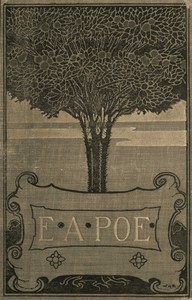
This edition of Edgar Allan Poe's poems, illustrated by W. Heath Robinson and introduced by H. Noel Williams, presents the poems in a sequence that moves from the most famous works—'The Raven,' 'The Bells,' 'Ulalume'—through a substantial section of poems written in youth, then to the longer philosophical poem 'Al Aaraaf' with its extensive notes, scenes from the unfinished play 'Politian,' and finally two critical essays: 'The Poetic Principle' and 'The Philosophy of Composition.' The arrangement allows readers to trace Poe's evolving voice and his persistent return to certain images: the tomb, the lost beloved, the supernatural journey, and the boundary between dream and waking.
Movement Between Dream and Waking
Throughout the collection, Poe's poems repeatedly stage a movement between dream states and waking reality, often leaving the boundary uncertain. In 'A Dream within a Dream,' the speaker questions the solidity of experience: 'Is it therefore the less gone?' The early poem 'Dreams' presents visions that 'have been to me / A life' and contrasts them with a waking world that feels less real. 'Dreamland' describes a region 'Out of Space—out of Time,' where the traveler encounters 'mountains toppling evermore' and 'seas that restlessly aspire.' This structural pattern—entering a liminal state, encountering strange sights, and returning changed—recurs across the volume, from the fairy-tale landscapes of 'Fairyland' to the haunted palace of 'The Haunted Palace,' which itself is a dream within a larger narrative.
Recurring Images of the Tomb and the Lost Beloved
Poe's poems are anchored by a small set of recurring images: the tomb, the lost beloved, and the raven or other bird as messenger. 'Annabel Lee' and 'Lenore' both center on a young woman who dies and is mourned, with the speaker insisting on the enduring power of their love. 'Ulalume' describes a journey to a tomb in 'the lonesome October' where the speaker discovers he has been walking to his beloved's grave. 'The Raven' turns on the repeated 'Nevermore' that denies the speaker's hope of reunion. Even in the early 'To Helen,' the woman is associated with light and guidance, but later poems increasingly place the beloved in the grave. The imagery is consistent: the tomb is often described with precise sensory details—the 'sepulchre' in 'Ulalume,' the 'chamber door' in 'The Raven'—and the speaker's fixation on the lost one becomes a structural obsession.
The Architecture of 'Al Aaraaf' and Its Notes
'Al Aaraaf,' the longest poem in the collection, is accompanied by extensive notes in which Poe explains his references to Arab astronomy, Milton, and classical mythology. The poem describes a star—Al Aaraaf—that serves as a purgatorial realm between Heaven and Hell, where souls experience a sorrow 'which the living love to cherish for the dead.' The notes reveal Poe's method: he cites sources for obscure allusions, such as the belief that moonlight in Egypt causes blindness, or that the albatross sleeps on the wing. The poem itself is densely allusive, with lines like 'The murmur that springs / From the growing of grass' attributed to an old English tale. This interplay between the poem's dreamlike narrative and the scholarly apparatus of the notes creates a distinctive structure: the reader moves between poetic vision and explanatory prose, much as the poem's souls move between worlds.
Scenes from 'Politian' and the Dramatic Fragment
The volume includes scenes from Poe's unfinished play 'Politian,' set in Rome. The excerpt opens with a dialogue between Alessandra and Castiglione, in which Castiglione's distracted sighs and references to 'Lalage' reveal a love triangle. The play is written in blank verse, and the dialogue is marked by abrupt shifts in tone: Alessandra's practical advice about dress and carriage contrasts with Castiglione's abstracted repetitions. The fragment breaks off before the plot resolves, leaving the reader with a sense of incompleteness that mirrors the unresolved grief in many of the poems. The inclusion of this dramatic work alongside the lyric poems and essays suggests Poe's interest in multiple forms, and the scene's focus on concealed emotion and social performance echoes themes found in poems like 'Bridal Ballad' and 'To One in Paradise.'
Readers approaching this edition may find it useful to read the poems in the order presented, noting how the early works prefigure the later masterpieces. The two essays at the end—'The Poetic Principle' and 'The Philosophy of Composition'—offer Poe's own theories of poetry, including his famous claim that a poem should be short and aim for a single effect. Returning to the poems after reading these essays can reveal the deliberate craft behind the seemingly spontaneous emotion. The illustrations by W. Heath Robinson, with their intricate line work, provide a visual counterpart to Poe's ornate and often eerie imagery.
Reading Poe’s verses again, I’m struck by how much longing hides in his rhymes—a pull toward something just out of reach. That same ache surfaces in Indian Legends and Other Poems — Edition Insights, though set to a softer, older rhythm. It felt like finding a faded photograph in a book I’d forgotten I owned.